
Dental Concerns
Worn-Down Teeth
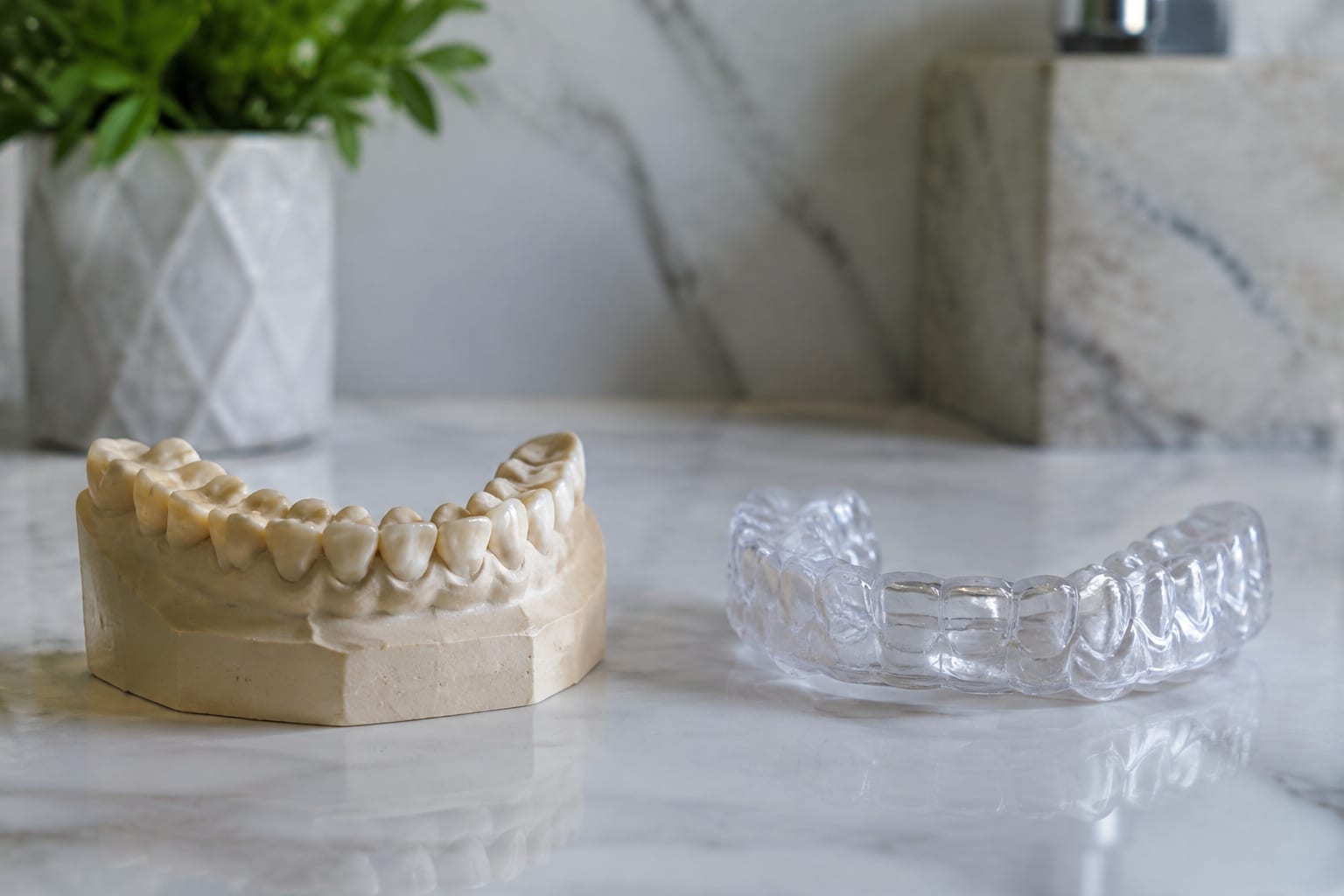
Worn-down teeth can be protected and rebuilt with nightguards, bonding, crowns, or a full-mouth reconstruction, depending on how much enamel has been lost. The first step is identifying what is causing the wear, so treatment protects the teeth as well as restoring them. Dr. Jaime Lee evaluates the pattern of wear and recommends care that restores comfortable chewing and the shape of your teeth.
What wears teeth down?
Teeth wear from grinding or clenching, often during sleep, and from acid in drinks, foods, or reflux that softens the enamel. Hard brushing and chewing on hard objects can also wear the teeth near the gumline or along the edges. Some wear is part of aging, and these causes often combine.
How does Dr. Lee evaluate worn teeth?
Dr. Lee examines where and how your teeth are worn, since flat edges, cupped chewing surfaces, and notches near the gumline point to different causes. She also checks your bite, your jaw joints, and any sensitivity. That evaluation shows whether protection, restoration, or both will serve your teeth best.
How can worn teeth be treated?
| Treatment | What it does | Often fits |
|---|---|---|
| Nightguard | A custom guard that protects teeth from grinding during sleep | Wear from grinding or clenching |
| Dental bonding | Rebuilds worn edges or notches with tooth-colored resin | Mild to moderate wear on a few teeth |
| Veneers | Restore the length and shape of front teeth | Worn or chipped front teeth |
| Crowns or onlays | Rebuild and protect teeth with significant wear | Teeth that have lost substantial structure |
| Full-mouth reconstruction | Restores many teeth together to rebuild the bite | Wear across most of the teeth |
Why protect the teeth before rebuilding them?
Restorations last longest when the cause of the wear is controlled. If grinding is the cause, Dr. Lee may recommend a nightguard to protect both natural teeth and new restorations. She plans the order of care so each treatment supports the next.
When should you schedule an evaluation?
Schedule an evaluation if your teeth look shorter or flatter, feel sensitive, or chip more easily than before. Jaw soreness or morning headaches can accompany grinding, and Dr. Lee evaluates those along with your teeth.
What affects the cost?
The cost depends on how many teeth are involved and the treatments needed, from a nightguard to crowns or a full-mouth reconstruction. Larger treatment can be completed in stages. Our team walks you through your benefits and the estimate first.
Frequently asked questions
Can worn enamel grow back?
No. Enamel does not regrow, so treatment focuses on protecting the remaining enamel and rebuilding lost tooth structure with restorations.
Do I grind my teeth at night?
Many people grind without knowing it. Signs include flattened teeth, jaw soreness on waking, and a partner hearing grinding, and Dr. Lee can identify wear patterns during your exam.
Will rebuilding my teeth change my bite?
When many teeth are restored, Dr. Lee plans the restorations around a comfortable, stable bite. She explains how your bite will be affected before treatment begins.
Related pages
Where is our Seattle dental office?
Smile Art is at 901 Boren Ave, Suite 1030, Seattle, WA 98104. We welcome new patients from Seattle and the surrounding neighborhoods.
Seattle, WA 98104
HoursMonday–Thursday, 8:00am–4:00pm
Phone(206) 325-7200
The Cabrini Medical Tower garage entrance is at 1010 Marion St. The building entrance is on Boren Ave; Dr. Lee is in Suite 1030. Parking for a Smile Art visit does not require validation. Directions to the garage. Check posted rates when you park.