
Implants for one or more teeth
An implant can support a crown to replace a single tooth, or several implants can support replacement teeth across a gap. The replacement tooth is shaped and shaded to fit your smile.
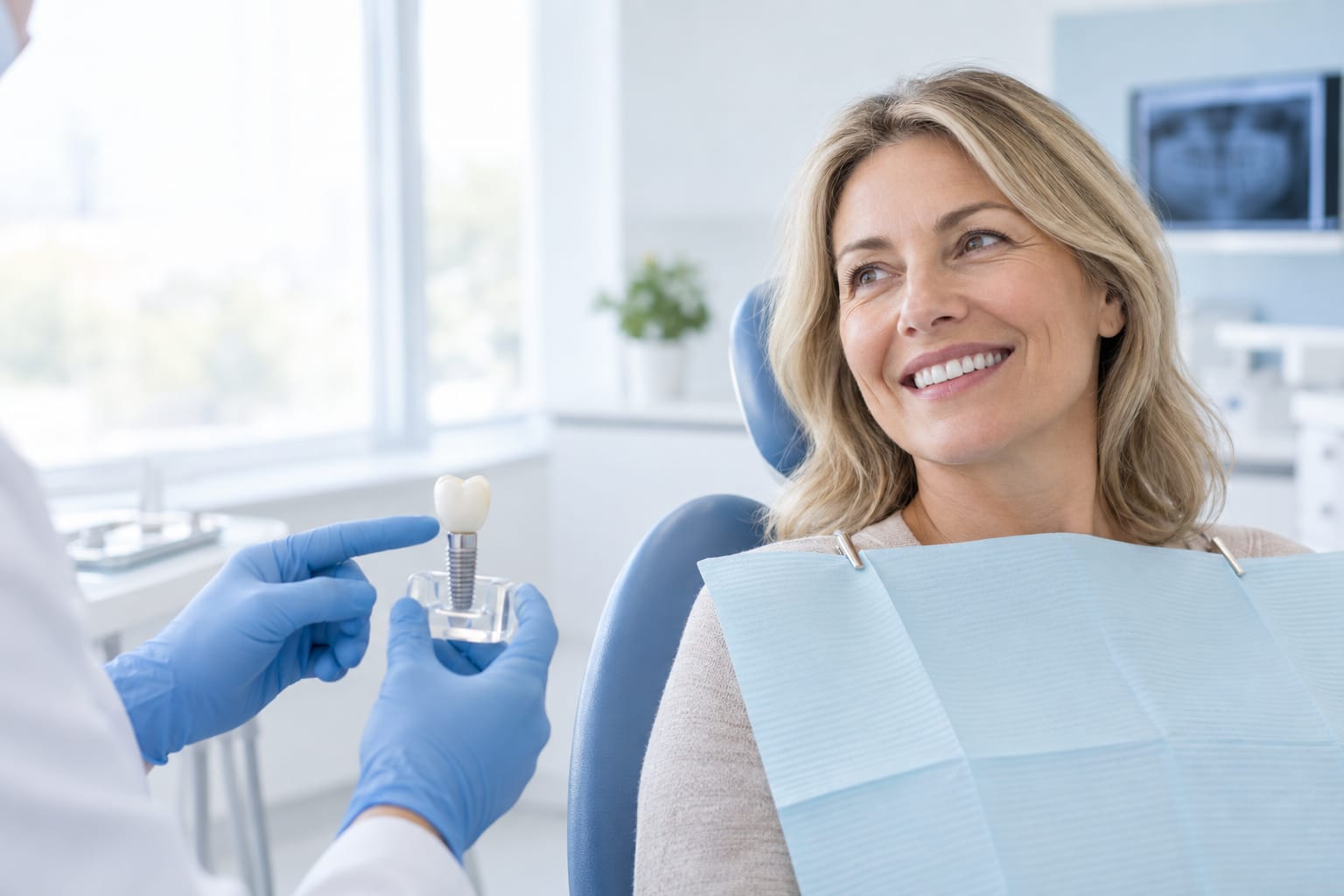
Dr. Jaime Lee plans dental implant treatment for patients replacing one tooth, several teeth, or a full arch. Implant-supported crowns, bridges, and dentures use fixtures anchored in the jawbone to support the replacement teeth.
She begins by evaluating your oral health, available bone, existing dental work, and the type of restoration needed to rebuild the missing teeth.

Dental implants
Dental implants restore support beneath a missing tooth instead of relying only on the visible replacement above the gums. This allows an implant to support a single crown, an implant-supported bridge, or a larger restoration for multiple missing teeth.
For a single missing tooth, an implant can replace the tooth without preparing neighboring teeth for support. For patients missing many teeth, implants can stabilize a removable denture or support a fixed full-arch restoration.
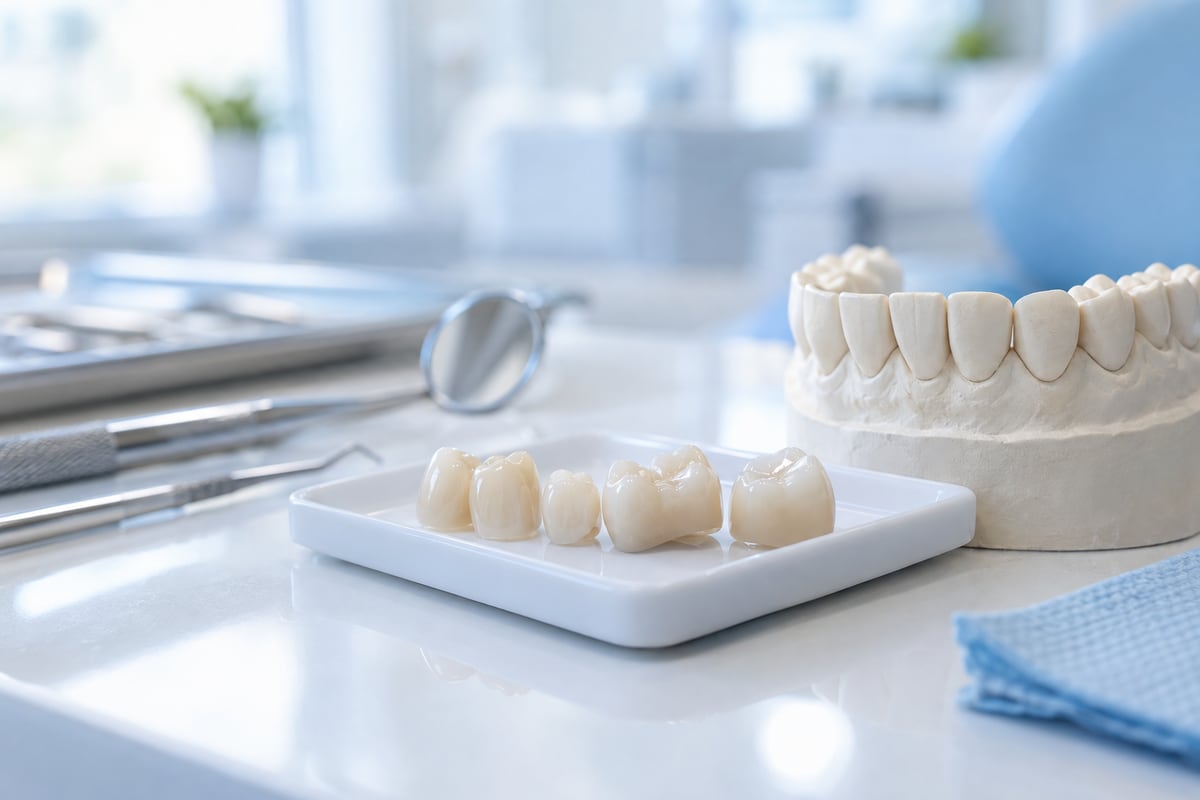
An implant can support a crown to replace a single tooth, or several implants can support replacement teeth across a gap. The replacement tooth is shaped and shaded to fit your smile.

Full-arch implants may support fixed replacement teeth for someone missing most or all teeth in an arch. A removable implant-supported denture is another design. The exam determines which options fit the site.

A snap-in denture is a removable denture that clips onto implants for additional support, so it stays in place better than a denture alone.
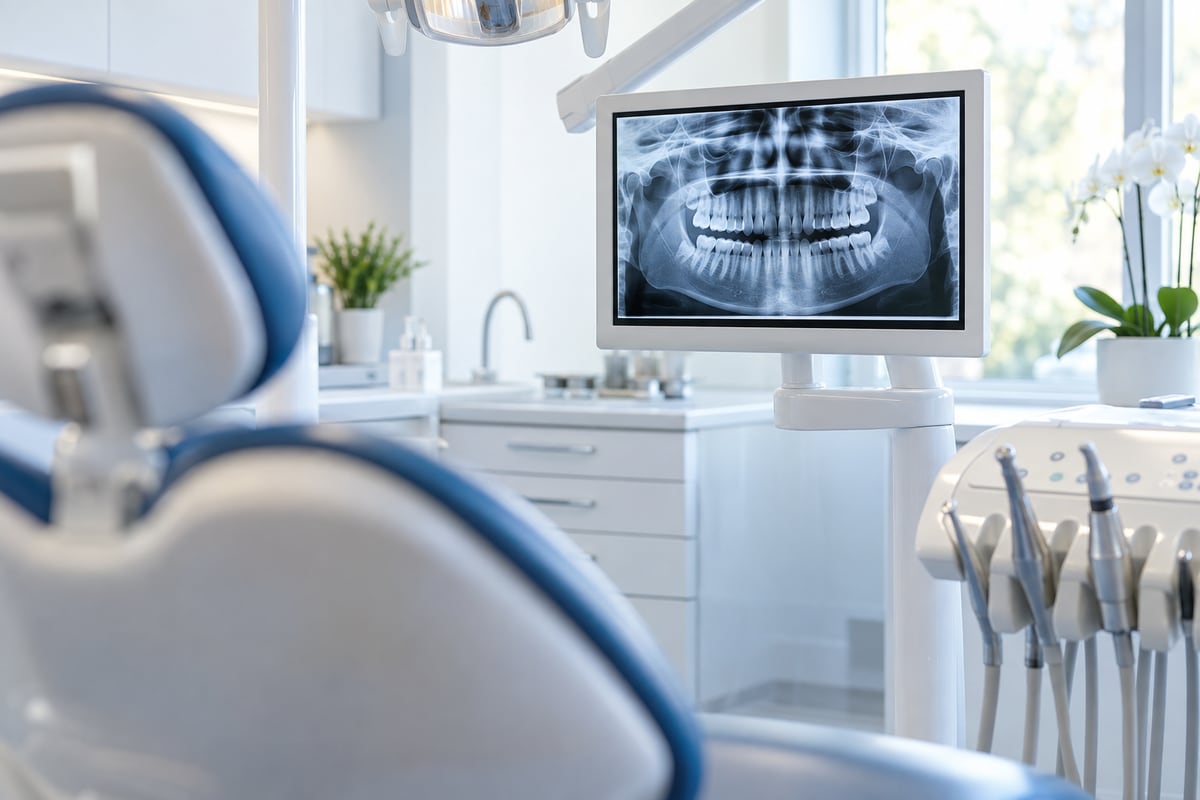
Dental implants can support replacement teeth, fixed bridges, or removable dentures. Dr. Lee evaluates the available bone, your bite, gum health, and medical factors that affect healing before planning implant treatment.
If the available bone does not provide enough support for the planned implant, bone grafting may be considered to add the bone needed to support it.
Long-term implant care includes daily plaque removal around the implant restoration and regular professional evaluation of the surrounding gums, bone, bite, and restoration.
If you notice bleeding, swelling, soreness, looseness, or a change in the way the restoration feels when you bite, schedule an evaluation.
Schedule an implant evaluation after tooth loss, when a tooth cannot be predictably restored, or when a bridge or denture no longer functions well. Dr. Lee can then evaluate the available bone and the replacement options for that space.
Implant cost depends on the number of implants, the type of replacement teeth, diagnostic and surgical needs, and whether extraction or bone grafting is part of the plan. Dr. Lee reviews the full treatment sequence before the office prepares the estimate.
Smile Art accepts all PPO insurance.
Contact the office with your plan details to ask about coverage and network participation.
Insurance acceptance does not mean implant treatment is covered; benefits depend on your plan.
Available through:
Financing is subject to the provider’s approval and terms.

Dr. Jaime Lee earned her Doctor of Dental Surgery from Loma Linda University in 2002 and is a Fellow of the International Congress of Oral Implantologists (FICOI).
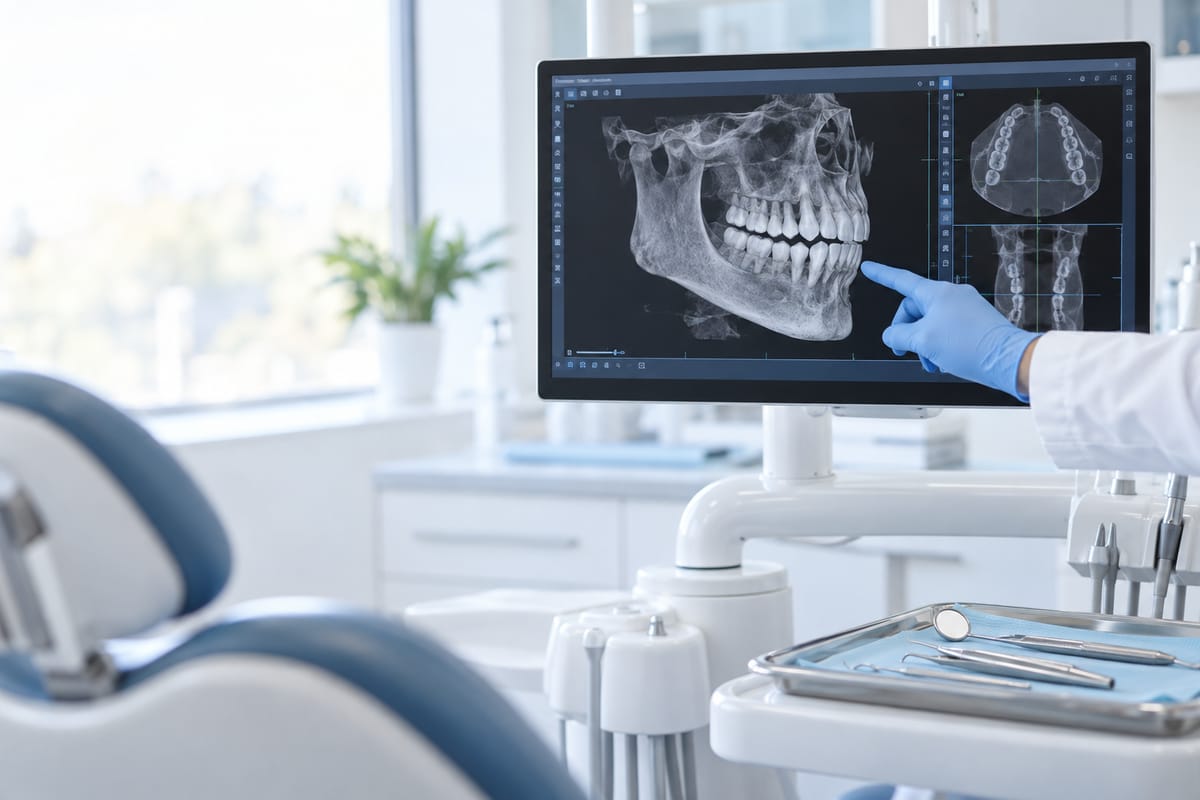
Her implant education includes training through the Kois Center, Pacific Implant Institute, Pacific Implant Academy, and Live Implant Training with Dr. Mongalo. She applies this training with CBCT imaging and digital scanning to evaluate implant sites and plan the final restoration.
Implant placement and restoration are separate stages. Dr. Lee will identify the surgical and restorative providers for your case before treatment starts.
Smile Art is at 901 Boren Ave, Suite 1030, Seattle, WA 98104. We welcome new patients from Seattle and the surrounding neighborhoods.
HoursMonday–Thursday, 8:00am–4:00pm
Phone(206) 325-7200
The Cabrini Medical Tower garage entrance is at 1010 Marion St. The building entrance is on Boren Ave; Dr. Lee is in Suite 1030. Parking for a Smile Art visit does not require validation. Directions to the garage. Check posted rates when you park.