
Inlay
An inlay restores an area within the chewing surface when the surrounding cusps remain adequately supported.
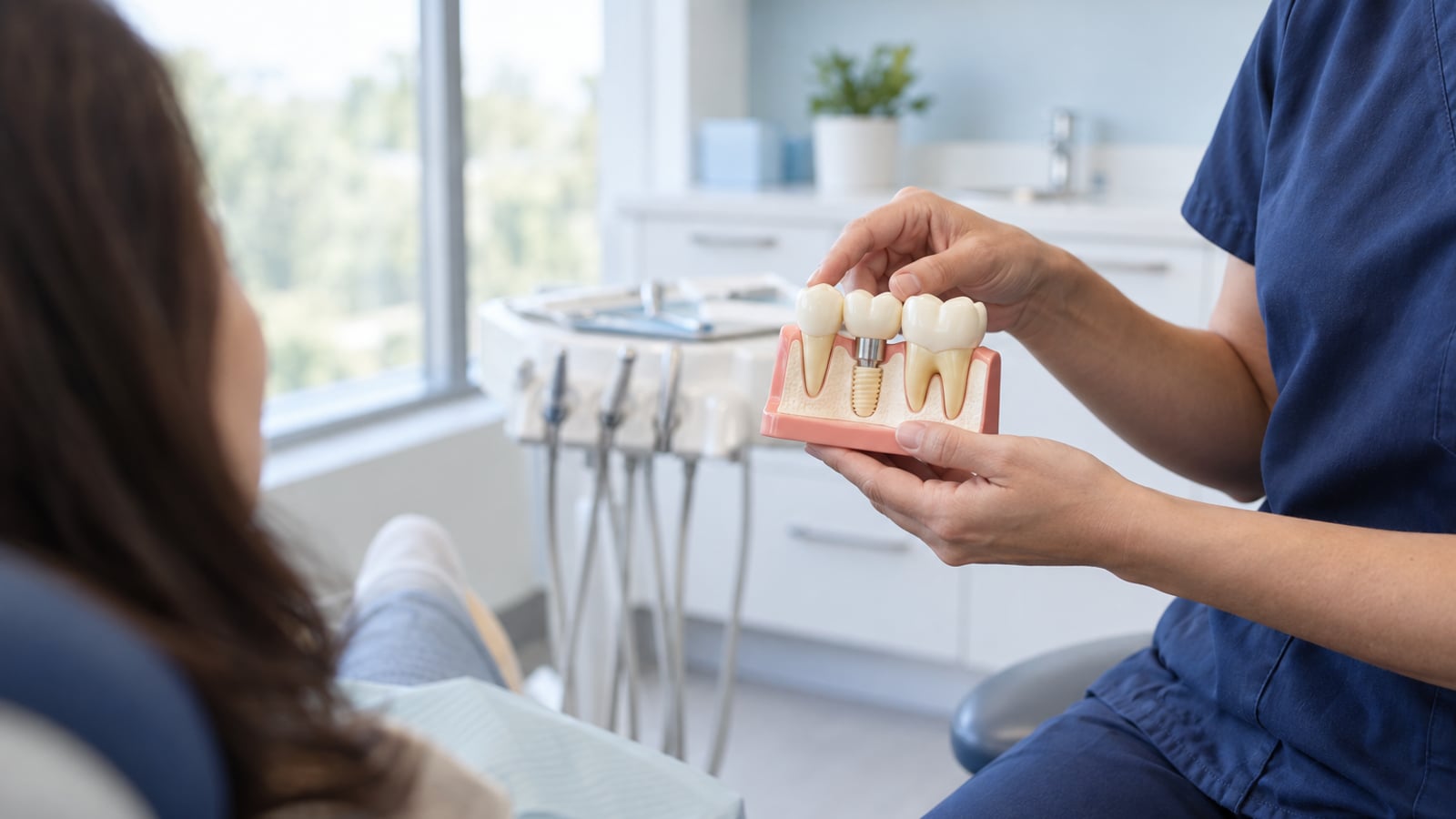
Dr. Jaime Lee uses inlays and onlays when a damaged tooth needs a custom indirect restoration but does not require full crown coverage.
She evaluates the location of the defect, the cusps that still have reliable support, and the forces on the tooth before deciding how much structure should be restored.

Partial-coverage restoration
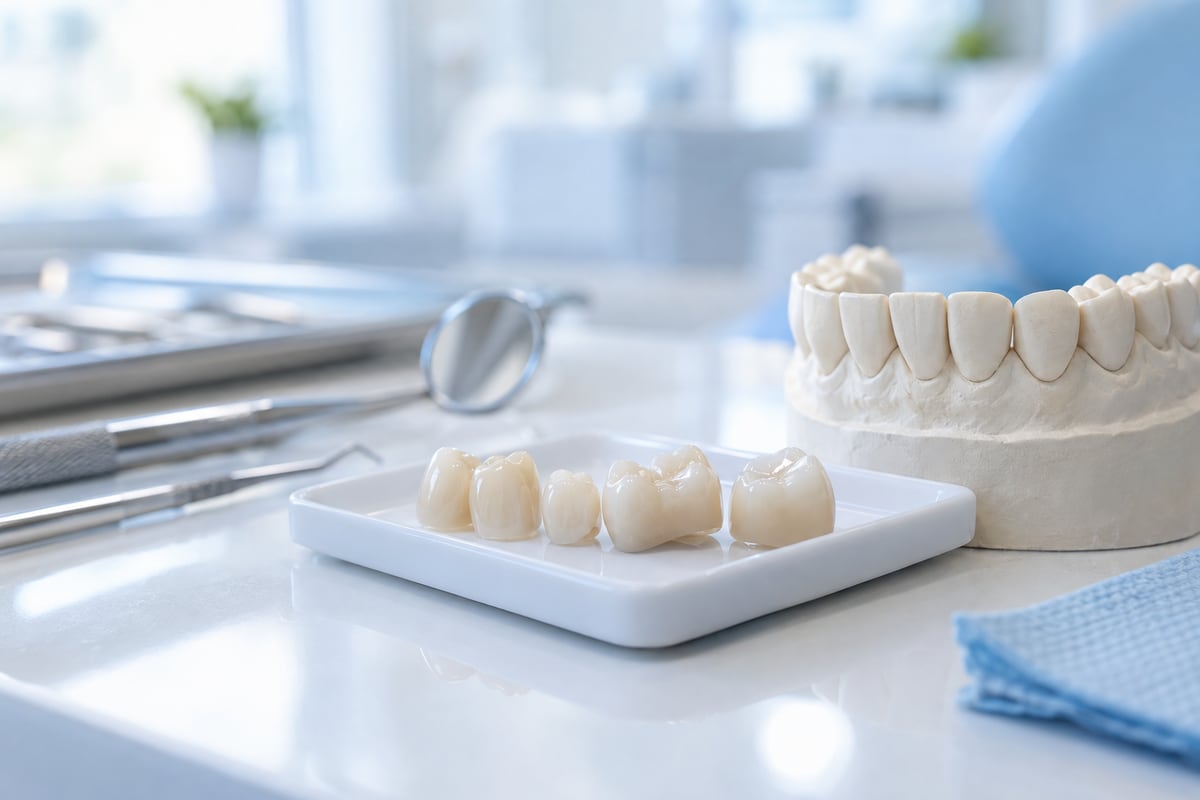
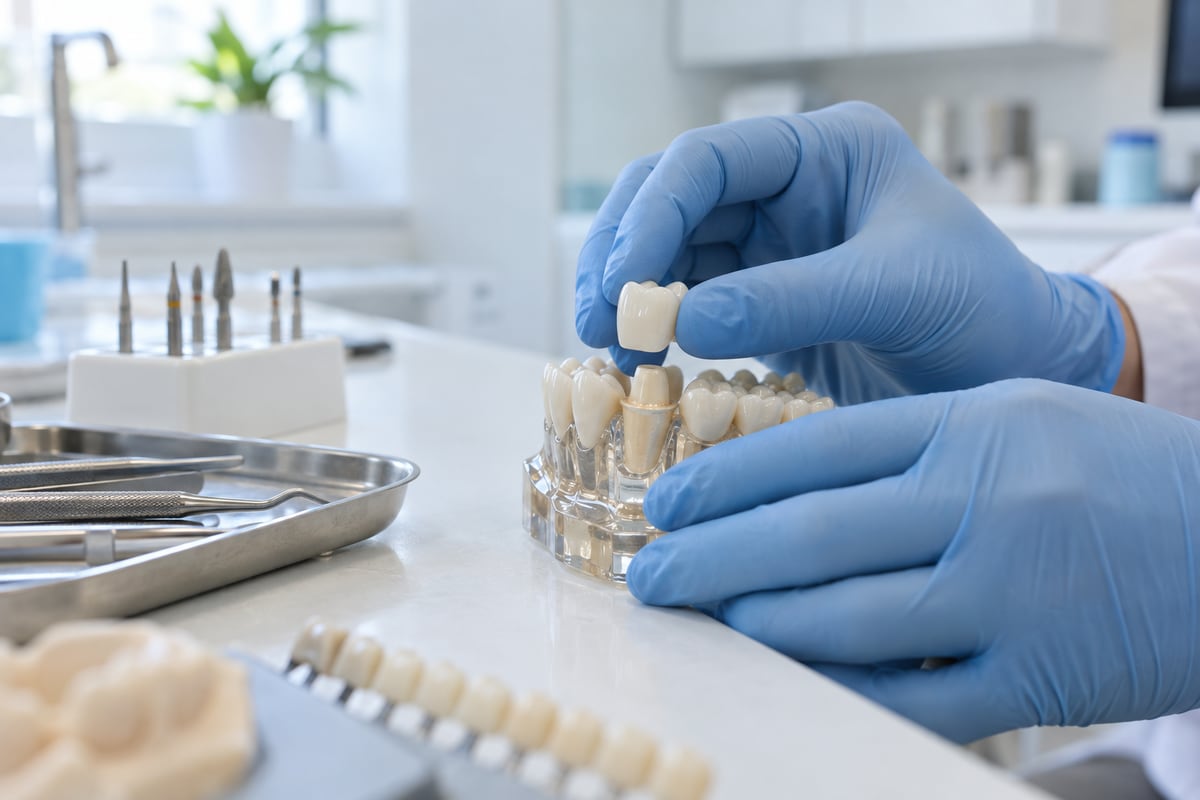
An inlay or onlay can rebuild a larger damaged area while preserving healthy tooth structure that does not need to be covered.
Dr. Lee uses this approach when the tooth needs more support than a direct filling can provide but enough sound structure remains to avoid full crown coverage.
An inlay restores an area within the chewing surface when the surrounding cusps remain adequately supported.

An onlay extends over one or more cusps when those parts of the tooth need additional coverage and support.

A crown covers the visible portion of the prepared tooth when the remaining structure requires broader protection.
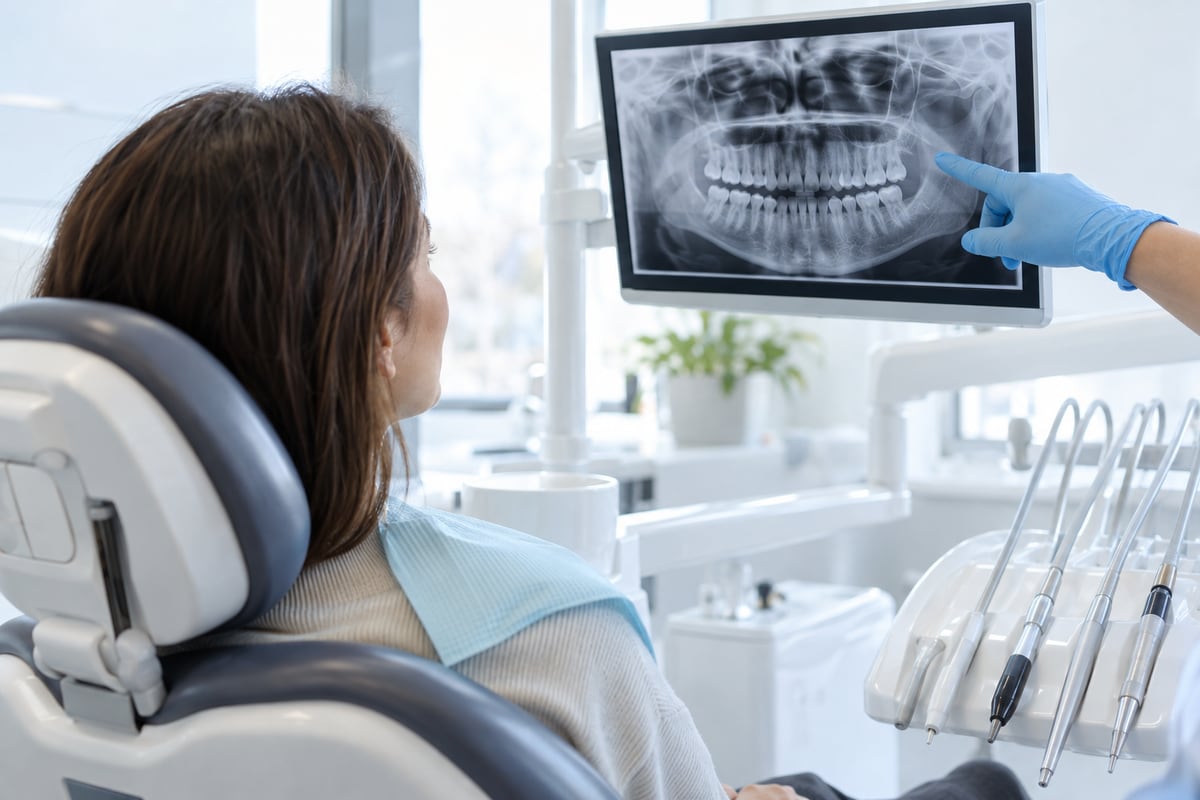
An inlay or onlay may be appropriate for a tooth with a larger area of decay, fracture, or failing restoration when enough healthy structure remains to support a partial-coverage restoration.
A crown may be needed if a tooth is significantly weakened, while a filling may be appropriate for a smaller area of damage.
Schedule an evaluation for a broken filling, fractured chewing surface, persistent sensitivity, or a tooth that feels different when you bite.
Dr. Lee uses the condition of the tooth rather than the name of the previous restoration to determine what level of coverage is needed next.
Your inlay or onlay cost depends on the tooth being restored, the size and complexity of the preparation, the services required, and your dental benefits. Smile Art accepts all PPO dental plans and can verify how your coverage applies.
Smile Art accepts all PPO insurance.
Contact the office with your plan details to ask about coverage and network participation.
Coverage depends on your plan and the restoration being completed.
Available through:
Financing is subject to the provider’s approval and terms.

Dr. Jaime Lee earned her Doctor of Dental Surgery from Loma Linda University in 2002. She uses inlays and onlays as part of a conservative restorative strategy when the tooth needs custom structural support without unnecessary full crown coverage.
An inlay stays within the chewing surface of the tooth. An onlay extends over one or more cusps when those areas also need coverage.
An onlay covers only the portions of the tooth that require reinforcement. A crown covers the visible portion of the prepared tooth when broader structural support is needed.
An inlay can replace a large filling when the damaged area is too large for another direct filling but enough healthy tooth remains for a partial restoration.
She evaluates the size and location of damage, remaining tooth structure, cusp support, existing restorations, and bite forces before choosing the restoration.
Yes. Dr. Lee evaluates the restoration and the supporting tooth before determining whether another partial restoration or a different treatment is appropriate.
Brush and floss normally, keep your preventive visits, and schedule an evaluation if the restoration becomes loose, damaged, or changes the way the tooth feels when you bite.
Smile Art is at 901 Boren Ave, Suite 1030, Seattle, WA 98104. We welcome new patients from Seattle and the surrounding neighborhoods.
HoursMonday–Thursday, 8:00am–4:00pm
Phone(206) 325-7200
The Cabrini Medical Tower garage entrance is at 1010 Marion St. The building entrance is on Boren Ave; Dr. Lee is in Suite 1030. Parking for a Smile Art visit does not require validation. Directions to the garage. Check posted rates when you park.